Dermatologists PPC Agency
We Provide Google Ads Management For Dermatologists - Contact Surfside PPC Today
I have managed Google Ads campaigns for Dermatology practices, and they can be challenging. It’s essential to create optimized landing pages for each treatment or service, such as acne care, skin rejuvenation, and laser treatments. Accurate attribution and conversion tracking are key to success. Over time, I’ve learned how to spend Dermatology Google Ads budgets effectively and implement strategies that consistently drive qualified patient leads.
Our Agency Provides Management and Consulting to Dermatologists
Are you a dermatologist looking to attract new patients and increase appointment bookings? Google Ads offers one of the most effective and measurable ways to reach people who are actively searching for dermatology treatments and skincare services in your area. In this comprehensive guide, I'll walk you through everything you need to know about creating successful Google Ads campaigns specifically for Dermatologists.
Paid advertising allows dermatology practices to connect directly with potential patients as they search for specific skin treatments or conditions. Whether you specialize in acne treatment, mole removal, eczema care, cosmetic dermatology, or laser procedures, Google Ads allows advertisers to target keywords and you can serve relevant ads and offers on your landing pages.
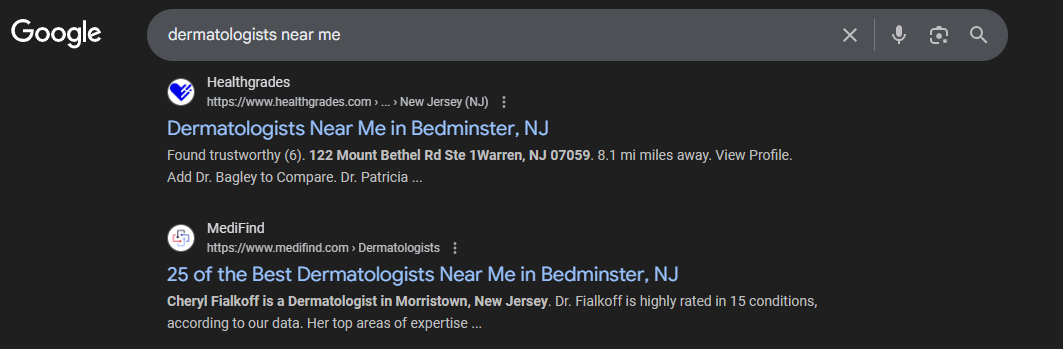
For dermatologists specifically, Google Ads is effective because:
Your potential patients are actively searching for skin treatments and solutions
You can target specific geographic areas around your clinic
You can highlight both medical and cosmetic dermatology services
You can showcase credentials, reviews, and before/after images
You can compete with larger dermatology networks even with a modest budget
To get started with Google Ads for your practice:
Create your Google Ads account using an existing Google account
Use the full version of Google Ads (avoid Google Ads Express by clicking on "Experienced with Google Ads?")
Create an account without a campaign initially so you can set up proper tracking
Confirm your business information including billing country, time zone, and currency
The foundation of successful dermatology Google Ads campaign begins with identifying the right keywords that potential clients use when searching for your services.
When it comes to search network campaigns, advertisers target and bid on keywords that they want to match to potential customers' search terms. Advertisers can create ads and landing pages that match closely to their targeted keywords.
For dermatologists, focus your keyword research on:
Condition-based keywords: “acne treatment near me,” “eczema dermatologist,” “psoriasis specialist [city]”
Cosmetic dermatology keywords: “Botox dermatologist,” “laser skin resurfacing,” “chemical peel [area]”
Location-based keywords: “[city] dermatologist,” “skin doctor near me,” “dermatology clinic in [area]”
Problem-solution keywords: “how to get rid of acne scars,” “skin rash treatment”
You can use helpful free keyword research tools like the Google Keyword Planner to find relevant keywords for your practice.
Your ad groups should be grouped together so that you can target relevant keywords that send traffic to targeted landing pages.
For a dermatologist, consider structuring your ad groups by treatment categories:
Medical Dermatology Ad Group: Acne, eczema, psoriasis, skin cancer screening
Cosmetic Dermatology Ad Group: Botox, fillers, laser resurfacing, microneedling
General Dermatology Ad Group: Skin exams, mole checks, rashes, consultations
Brand/Clinic Ad Group: Your clinic’s name, doctor name, and reputation keywords
Your ads should match closely to the keywords in your ad groups. Keywords, ads, and landing pages should align very closely. You need to fill out all of the fields for your advertisements, set final URLs that match your keywords, create great headlines, and write descriptions that clearly show the benefits of your products and services.
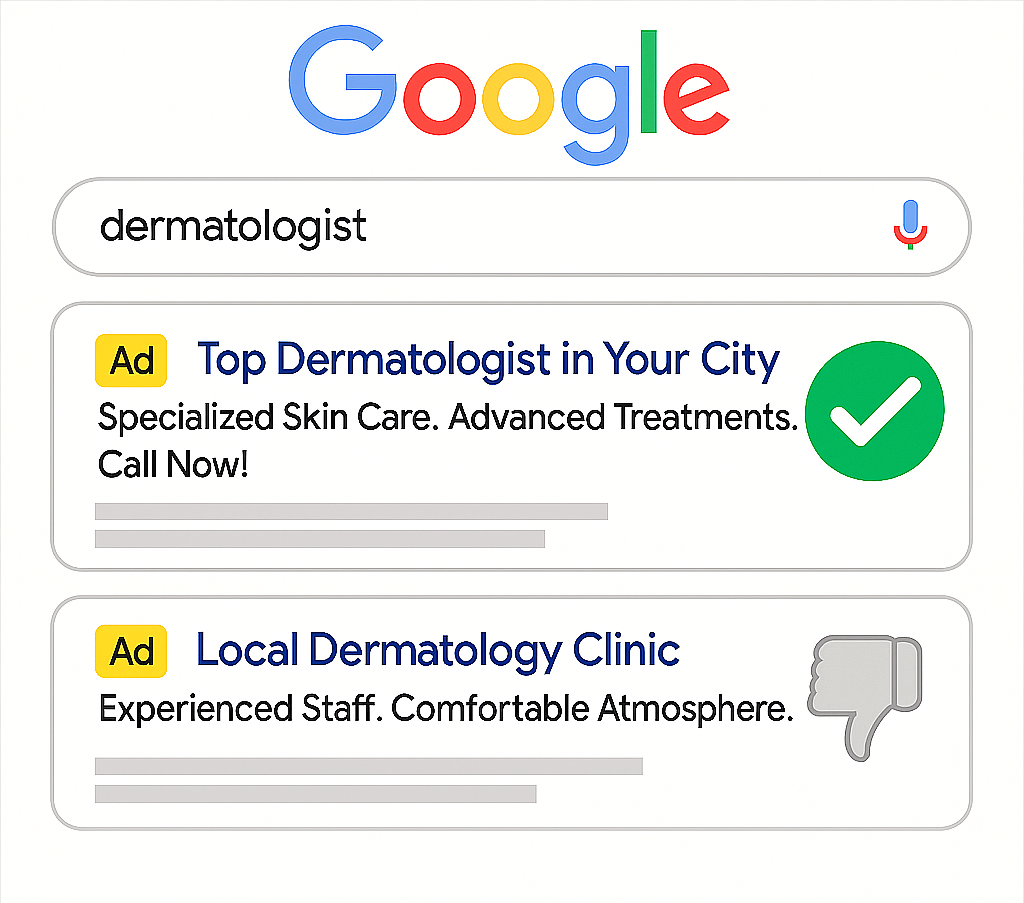
For dermatology ads, include:
Specific treatments you provide (“Board-Certified Dermatologist – Acne & Cosmetic Care”)
Unique selling points (“Same-Day Appointments,” “Insurance Accepted,” “Over 10 Years of Experience”)
Promotions or offers (“Free Skin Consultation,” “New Patient Specials”)
Location and accessibility details
Clear calls to action (“Book an Appointment,” “Schedule a Skin Consultation”)
It is a best practice in Google Ads to create multiple ads in each ad group. You should create at least 1 Responsive Search Ad and at least 1 Expanded Text Ad in each ad group.
Use all relevant ad extensions for your advertisements. Make sure you go through the ad extensions one-by-one to apply every one that applies to your business.
For dermatologists, the most valuable ad extensions include:
Location Extensions: Display your clinic’s address and map
Call Extensions: Enable one-tap calling from mobile devices
Sitelink Extensions: Link to treatment pages like “Acne Care,” “Laser Treatments,” “Cosmetic Dermatology,” and “Meet the Doctor”
Price Extensions: Show consultation costs or treatment ranges
Structured Snippets: Highlight categories such as “Acne • Eczema • Botox • Skin Cancer Screening”
Image Extensions: Use professional photos of your clinic, team, or treatment results (with consent)
Choose your daily budget and your bid strategy for your campaign. You should consider using a smart bidding strategy like Enhanced CPC, Target CPA, or Target ROAS.
For dermatologists, I recommend:
Start with a daily budget of $40–$80
Use Manual CPC or Enhanced CPC at launch
Transition to Target CPA once you have enough conversion data
Prioritize higher bids for profitable services such as laser treatments or injectables
Allocate part of your budget for branded and local campaigns
Set up conversion tracking to measure the performance of your Google Ads campaigns. Create Goals in Google Analytics or enable Ecommerce reporting, then import conversions into your Google Ads account.
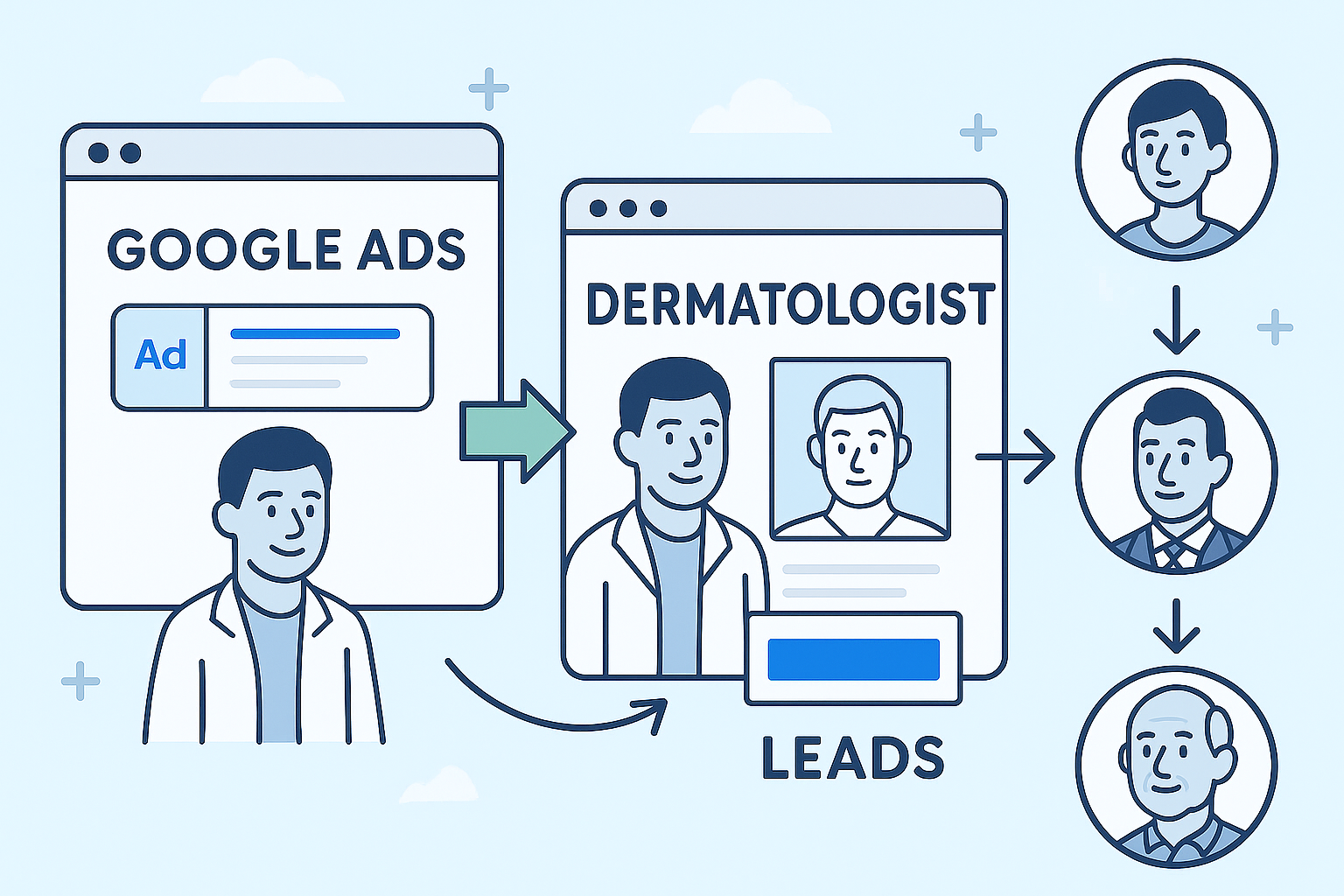
Key conversion actions to track for dermatologists:
Online appointment bookings
Contact form submissions
Phone calls from your website and ads
Virtual consultation requests
Patient portal sign-ups or new client forms
Update conversion action settings to categorize conversions, set values for each conversion, and decide whether to include the conversion in your conversions column for your campaign.
For dermatology treatments, assign values to each conversion type based on your average patient revenue or lifetime value.
If you follow the simple steps below and stay consistent, your website and your content will start to rank higher in search engines. The key with any SEO project is consistency and focus. Focus on the topics and the keywords that will drive additional traffic back to your website and create or improve content every single day.
Apply this to your Dermatology Google Ads for regular optimization:
Review search terms reports weekly to add negative keywords
Adjust bids for keywords that drive conversions
Pause underperforming ads and replace them with new variations
Test different landing pages for your most important treatments
Geographically expand or narrow your targeting based on performance
On-Page SEO includes factors like title tags, meta descriptions, header tags, image alt tags, internal linking, and external linking. In addition, you want to make sure your website is fast in terms of loading speed and easily accessible by users.
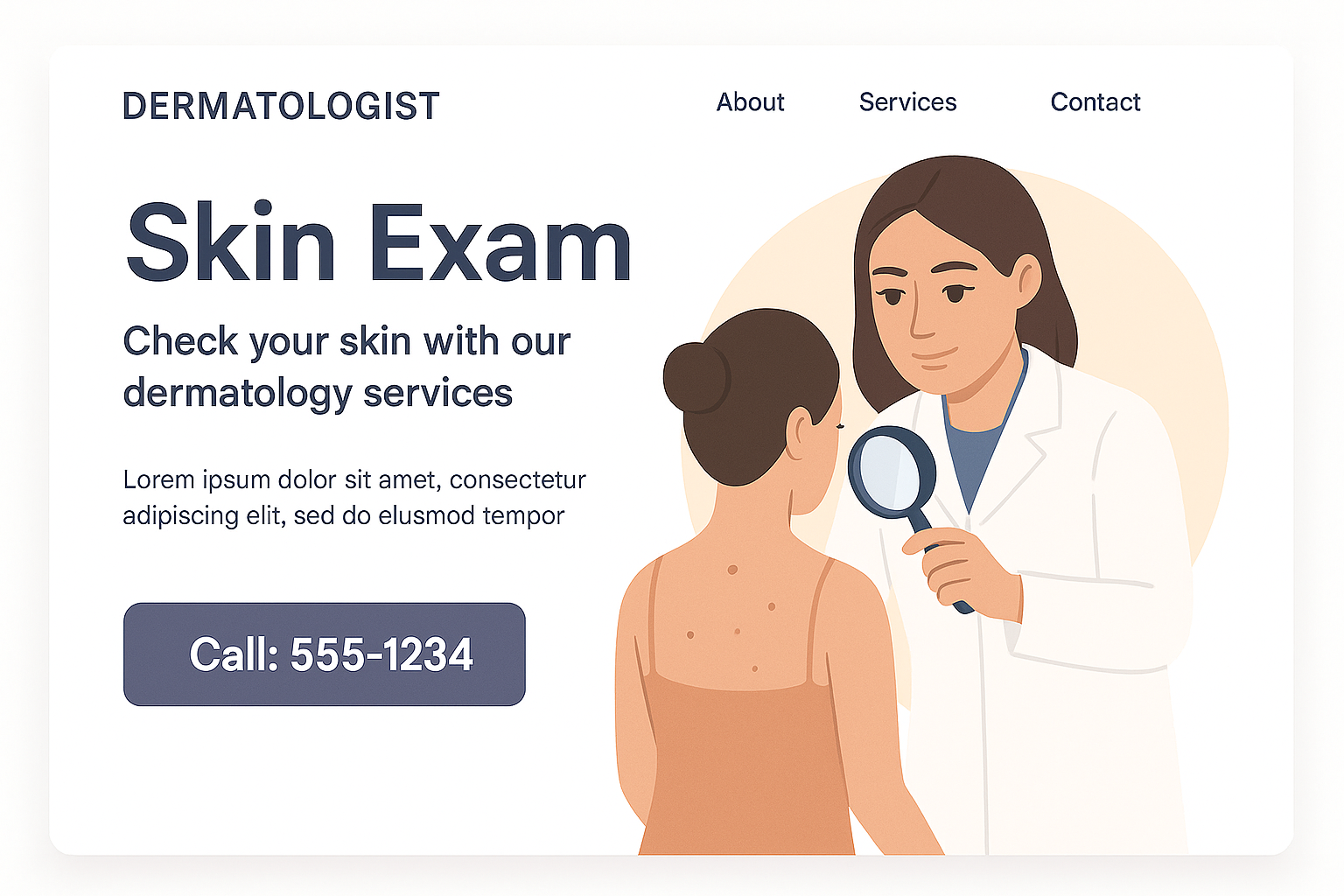
For dermatologist landing pages specifically:
High-quality before/after photos (with consent)
Doctor credentials and certifications
Patient testimonials and reviews
Insurance information (if applicable)
Treatment details and FAQs
Simple, mobile-friendly appointment form or booking widget
Advertisers can use audience targeting or content targeting to reach people as they browse specific websites, watch YouTube videos, or use mobile apps. Performance Max campaigns can reach people across all of Google. One challenge you may find is using Retargeting or Your Data segments because Google limits that for health-related businesses.
For dermatologists, consider display campaigns targeting:
People researching skincare or cosmetic treatment topics
Audiences interested in health, wellness, and beauty content
Custom intent audiences (e.g., “acne dermatologist near me,” “laser skin resurfacing”)
Retargeting visitors who viewed your treatment pages (where compliant with healthcare ad policies)
Advertisers have complete control over their budgets and they can optimize their campaigns over time to lower costs.
Key metrics to track for dermatology Google Ads:
Cost per Appointment (CPA)
Conversion Rate by treatment type
Return on Ad Spend (ROAS)
Click-Through Rate (CTR)
Quality Score for key search terms
The main takeaway is that you need to build your website, your pages, and your content around the most popular keywords related to your products and services. From there, you want to remain consistent and continue to improve and stay relevant over time.
For dermatologists, Google Ads represents one of the most effective ways to reach new patients actively searching for skin treatments and cosmetic procedures. By focusing on the right keywords, creating compelling ads, and continually optimizing your campaigns, you can efficiently grow your dermatology practice increase appointments, strengthen your brand, and achieve consistent growth online.