Dental PPC Agency
We Provide Google Ads Management For Dentists - Contact Surfside PPC Today
I've managed Google Ads campaigns for dentists and dental practices, and success in this field comes down to precision and relevance. Each service whether it’s dental implants, cosmetic dentistry, or routine cleanings deserves its own dedicated landing page to match the ad intent. Tracking calls, appointment requests, and actual patient bookings is essential for measuring performance accurately. Through experience, I've learned how to allocate dental advertising budgets efficiently and implement strategies that bring in consistent, high-value patients.
Our Agency Provides Management and Consulting to Dental Practices
Are you a dentist or dental practice owner looking to attract more patients and grow your practice? Google Ads is one of the most effective digital marketing strategies to reach potential patients who are actively searching for dental services in your area. In this guide, I’ll walk you through everything you need to know about building successful Google Ads campaigns specifically for dental practices.
Paid advertising allows dental practices to appear at the top of Google search results when people are looking for treatments like teeth cleanings, whitening, implants, and emergency dental care. With the right strategy, you can generate consistent appointment requests and build long-term patient relationships.
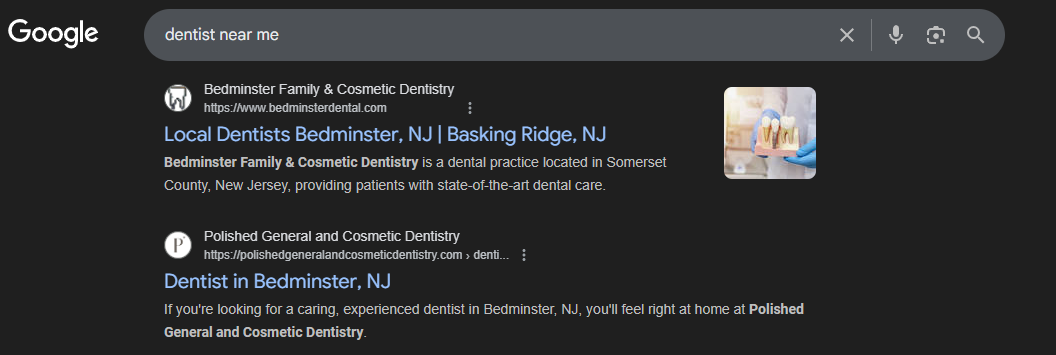
For dentists, Google Ads is effective because:
Your potential patients are actively searching for the services you offer
You can target specific locations around your practice
You can showcase special offers, insurance acceptance, or new patient discounts
You can compete with larger dental chains by focusing on local visibility
To get started with Google Ads for your dental practice:
Create your Google Ads account using an existing Google account.
Choose the full version of Google Ads (avoid Smart Mode by selecting “Experienced with Google Ads?”).
Create an account without a campaign so you can set up conversion tracking properly.
Confirm your business information including billing country, time zone, and currency.
The foundation of a successful dental Google Ads campaign starts with the right keywords. Identify search terms that your ideal patients use when looking for dental services.
When it comes to search network campaigns, advertisers target and bid on keywords that they want to match to potential customers' search terms. Advertisers can create ads and landing pages that match closely to their targeted keywords.
For dentists, focus your keyword research on:
Service-Specific Keywords: “teeth whitening near me,” “dental implants [your city],” “emergency dentist open now”
Problem-Solution Keywords: “tooth pain relief,” “fix chipped tooth,” “missing tooth options”
Location-Based Keywords: “[your city] dentist,” “family dentist near [neighborhood]”
Insurance or Offer Keywords: “dentist that takes Delta Dental,” “new patient special cleaning”
You can use helpful free keyword research tools like the Google Keyword Planner to find relevant keywords for your dental practice.
Organize your campaigns into ad groups that match closely related keywords to targeted landing pages. This improves Quality Score and ensures your ads are highly relevant.
Example ad group structure:
General Dentistry Ad Group: cleanings, checkups, dental exams
Cosmetic Dentistry Ad Group: teeth whitening, veneers, smile makeovers
Implant Dentistry Ad Group: dental implants, implant restoration, missing teeth solutions
Emergency Dentistry Ad Group: toothache, chipped tooth, emergency dentist near me
Brand Ad Group: your practice name and variations
Your ads should match closely to the keywords in your ad groups. Keywords, ads, and landing pages should align very closely. You need to fill out all of the fields for your advertisements, set final URLs that match your keywords, create great headlines, and write descriptions that clearly show the benefits of your products and services.
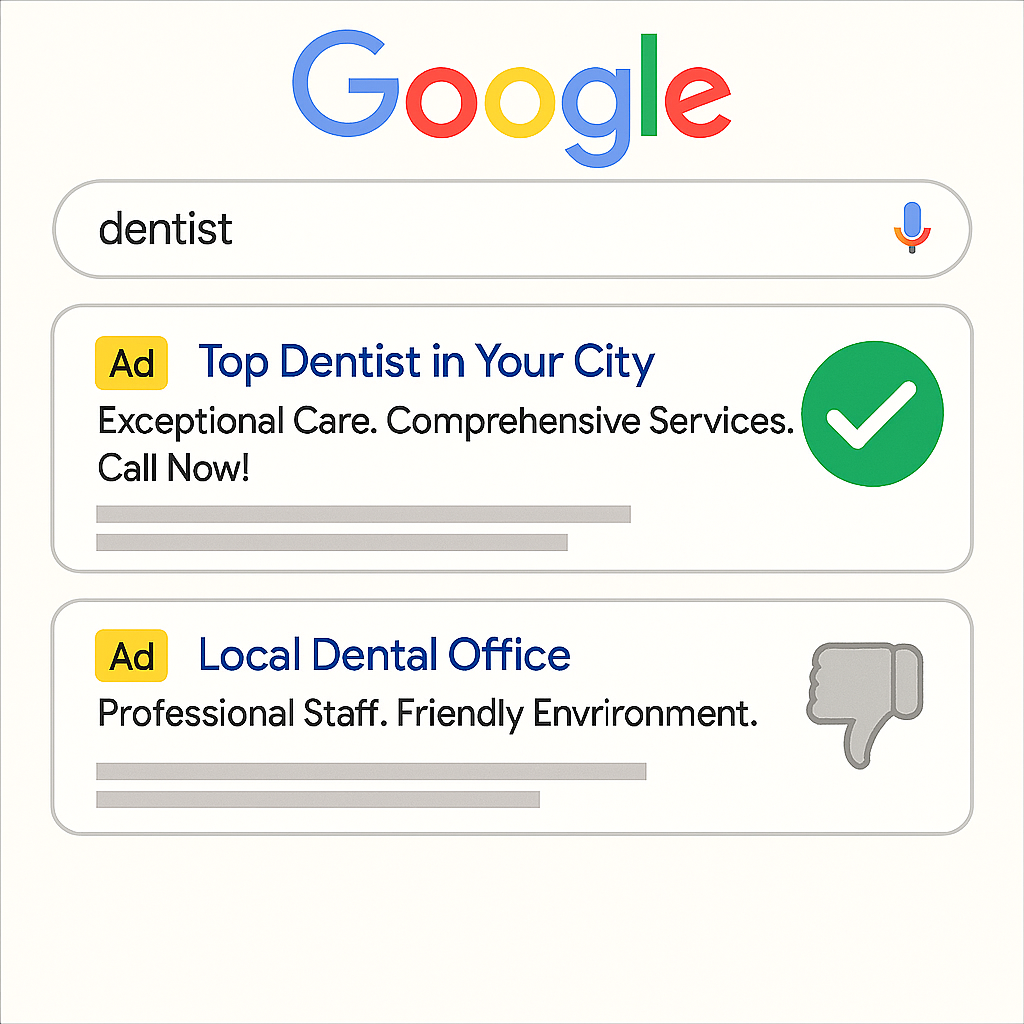
For dental practices, your ads should include:
The main dental service offered
A strong call to action (“Book an Appointment,” “Call for Same-Day Care”)
Trust factors (experienced dentists, local practice, insurance accepted)
Location or service hours (“Open Saturdays,” “Downtown [City]”)
Promotions (“Free Whitening for New Patients”)
It is a best practice in Google Ads to create multiple ads in each ad group. You should create at least 1 Responsive Search Ad and at least 1 Expanded Text Ad in each ad group.
Use all relevant ad extensions for your advertisements. Make sure you go through the ad extensions one-by-one to apply every one that applies to your business.
For dental practices, the most valuable ad extensions include:
Location Extensions: Show your dentist office's address directly in the ad
Call Extensions: Add your phone number so potential clients can call with one tap
Sitelink Extensions: Link to specific treatment pages, your before/after gallery, and booking pages
Price Extensions: Showcase your treatment prices and promotions
Structured Snippet Extensions: Highlight your range of services
Image Extensions: Display high-quality images of your dentist office or patients
Choose your daily budget and your bid strategy for your campaign. You should consider using a smart bidding strategy like Enhanced CPC, Target CPA, or Target ROAS.
For Dentists, I recommend:
Starting with a minimum daily budget of $30-50 per day
Beginning with Manual CPC or Enhanced CPC bidding
Transitioning to Target CPA once you've gathered enough conversion data
Setting higher bids for your highest-value treatments (those with the best profit margins)
Set up conversion tracking to measure the performance of your Google Ads campaigns. Create Goals in Google Analytics or enable Ecommerce reporting, then import conversions into your Google Ads account.
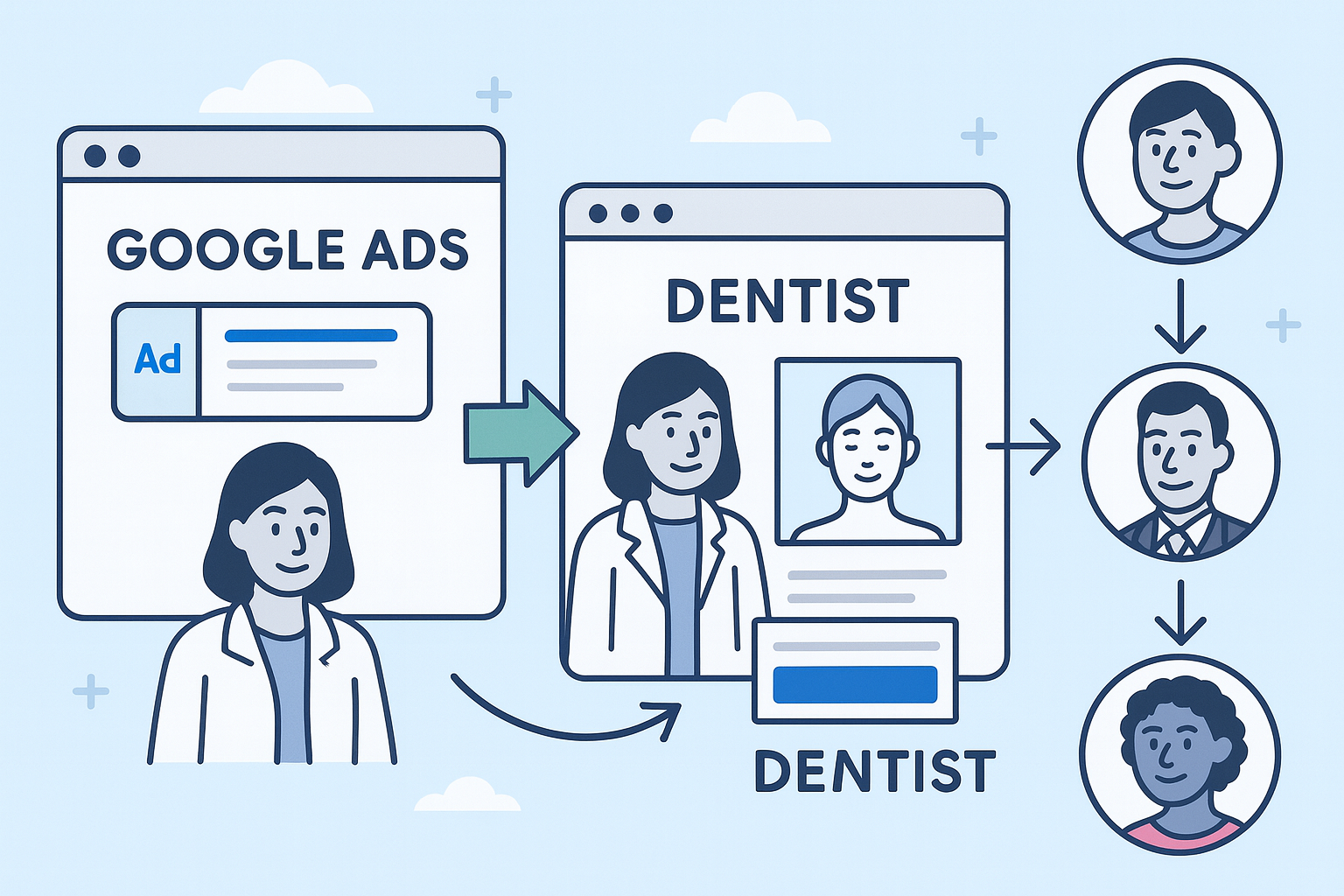
Key conversion actions to track for dental practices:
Appointment form submissions
Phone calls from ads or your website
Online booking confirmations
New patient consultation requests
Update conversion action settings to categorize conversions, set values for each conversion, and decide whether to include the conversion in your conversions column for your campaign.
For dental treatments, assign appropriate values to each conversion type based on average patient revenue or treatment value.
If you follow the simple steps below and stay consistent, your website and your content will start to rank higher in search engines. The key with any SEO project is consistency and focus. Focus on the topics and the keywords that will drive additional traffic back to your website and create or improve content every single day.
Apply this to your Dental Practice Google Ads for regular optimization:
Review search terms reports weekly to add negative keywords
Adjust bids for keywords that drive conversions
Pause underperforming ads and replace them with new variations
Test different landing pages for your most important treatments
Geographically expand or narrow your targeting based on performance
On-Page SEO includes factors like title tags, meta descriptions, header tags, image alt tags, internal linking, and external linking. In addition, you want to make sure your website is fast in terms of loading speed and easily accessible by users.
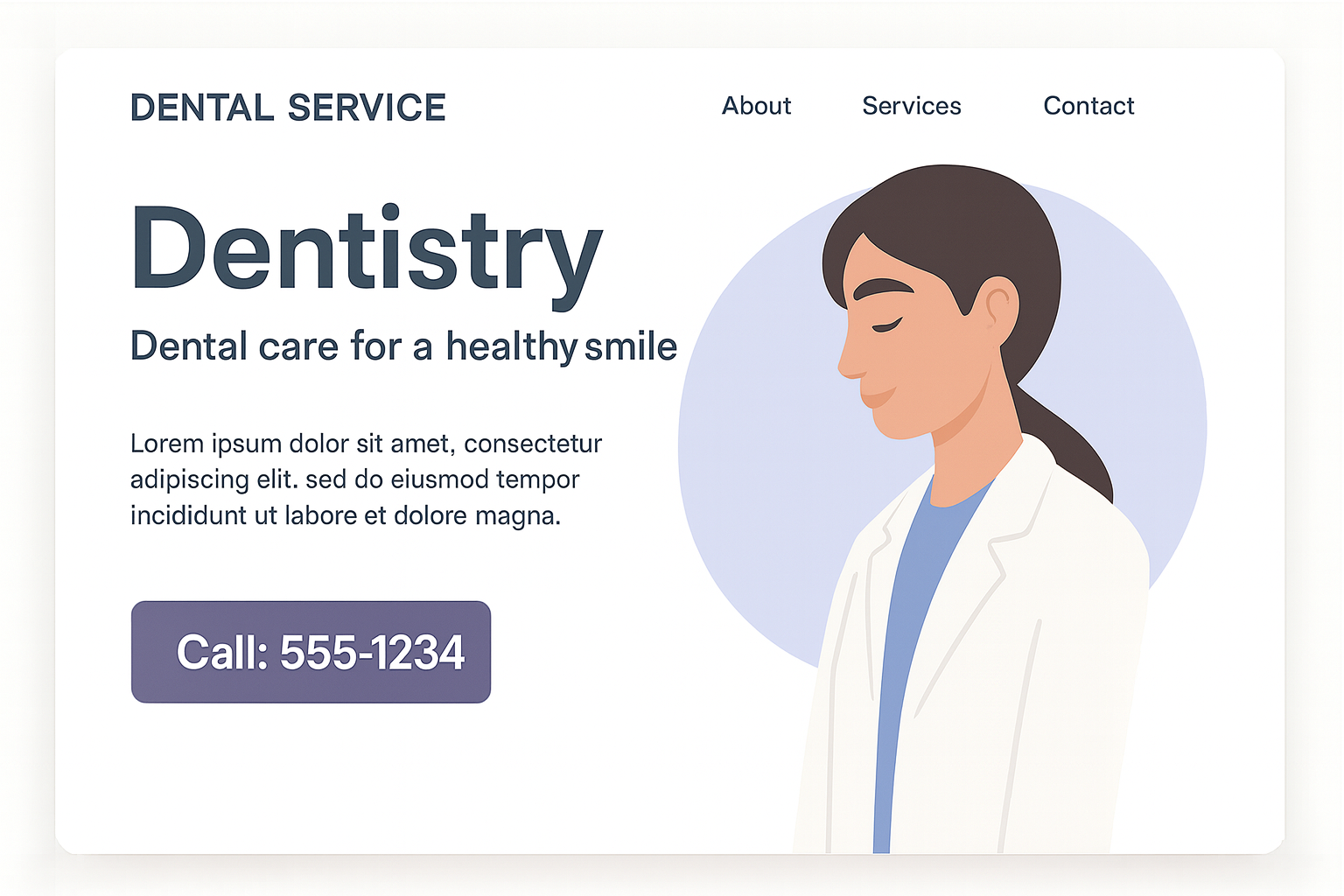
For dental practice landing pages specifically:
Highlight your key services with clear visuals
Include photos of your team and office for trust
Add patient testimonials or reviews
List accepted insurance plans and financing options
Display office hours and a clickable phone number
Make booking easy with an embedded appointment form
Ensure pages load quickly on mobile devices
Advertisers can use audience targeting or content targeting to reach people as they browse specific websites, watch YouTube videos, or use mobile apps. Performance Max campaigns can reach people across all of Google. One challenge you may find is using Retargeting or Your Data segments because Google limits that for health-related businesses.
For dentists, consider display campaigns targeting:
People searching for dental care or cosmetic improvements
Viewers of oral health or smile makeover videos on YouTube
Visitors of health and wellness websites
Remarketing audiences (past visitors to your site)
Advertisers have complete control over their budgets and they can optimize their campaigns over time to lower costs.
Key metrics to track for dental practices Google Ads:
Cost per acquisition (CPA) for each treatment type
Return on ad spend (ROAS)
Conversion rate by treatment and ad group
Click-through rate (CTR) for different ad variations
Quality Score for your most important keywords
The main takeaway is that you need to build your website, your pages, and your content around the most popular keywords related to your products and services. From there, you want to remain consistent and continue to improve and stay relevant over time.
For your dental practice, Google Ads represents one of the most effective ways to reach new patients who are actively searching for your treatments and services. By focusing on the right keywords, creating compelling ads, and continually optimizing your campaigns, you can efficiently grow your Dental Practice and outperform your competitors.